Explore our network of country and industry based websites to access localized information, product offerings, and business services across our group.
Log in to start sending quotation requests for any product.
Don't have an account? Sign Up Here
Home How Potassium Alum Enhances Paper Quality and Production Efficiency
Trade Insights | Applications and Buyers | 11 August 2025
Introduction to Potassium Alum in Papermaking
Chemical Properties and Characteristics
Historical Use in the Paper Industry
Role in Sizing and Improving Paper Quality
Contribution to Production Efficiency
Sustainability and Environmental Impact
Global Market Overview
Challenges and Alternatives
Future Outlook for Potassium Alum in Papermaking
Conclusion
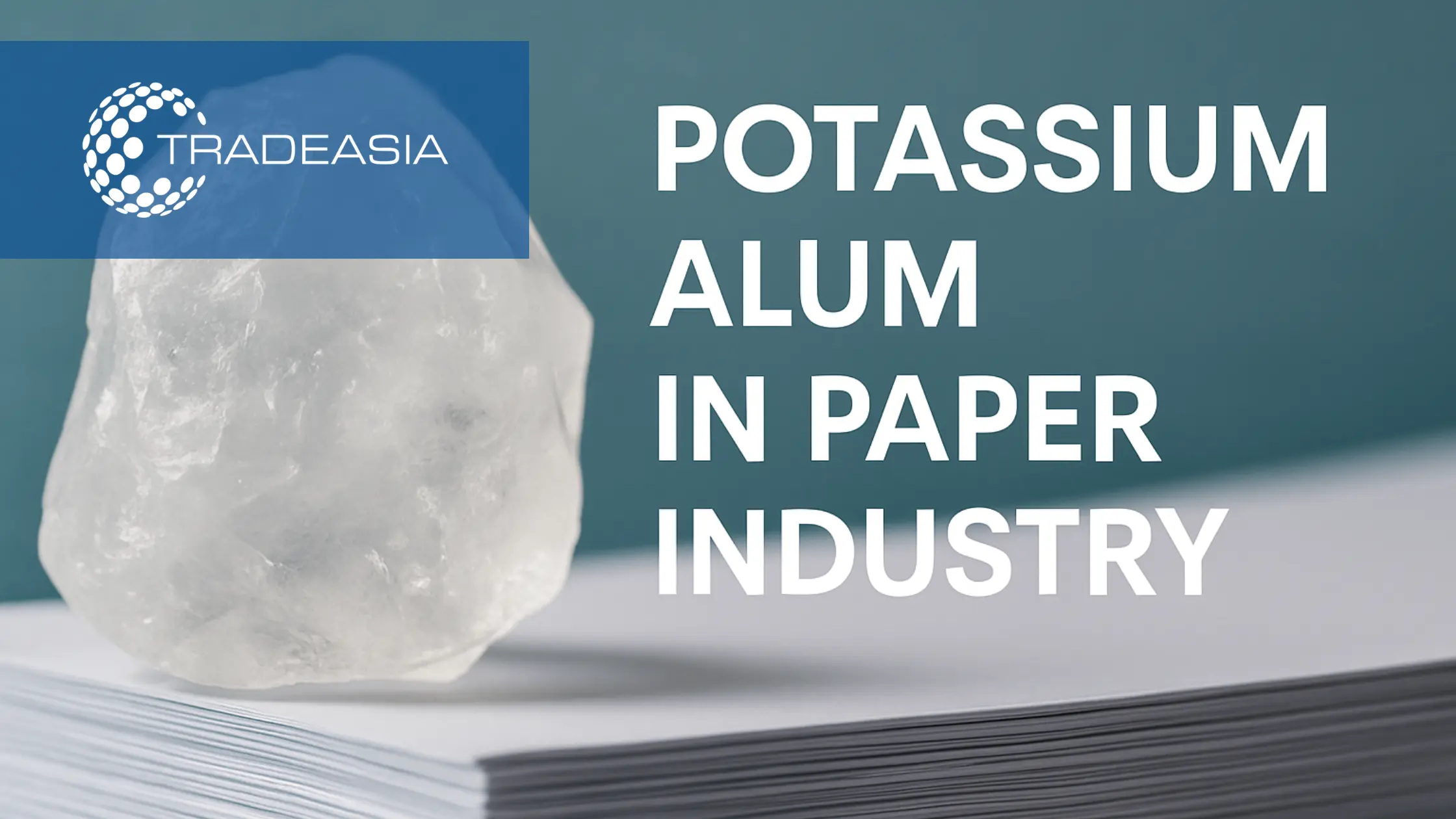
Potassium alum, also known chemically as potassium aluminum sulfate (KAl(SO₄)₂·12H₂O), has long been recognized as a valuable additive in the paper industry. Its unique chemical properties make it a versatile agent for improving paper quality, enhancing production efficiency, and achieving specific performance characteristics in the final product.
In the modern papermaking process, potassium alum is applied primarily during the sizing stage, where it plays a critical role in improving printability, surface strength, and durability of paper products.
Potassium alum is a white, crystalline double sulfate salt of potassium and aluminum. It is soluble in water, producing a mildly acidic solution that aids in bonding fibers and fillers in the paper pulp. Its pH-modifying ability is crucial for optimizing the sizing process, as it helps activate rosin-based sizing agents, which are still used in many paper manufacturing plants worldwide.
The use of alum in papermaking dates back several centuries, particularly during the era when handmade paper production dominated. Initially, aluminum sulfate was the more common choice, but potassium alum also found niche applications in specialty paper manufacturing. Over time, with advancements in chemical engineering, potassium alum has retained its relevance due to its performance benefits and adaptability in modern processes.
Sizing refers to the treatment of paper fibers to make them less absorbent, enabling controlled ink absorption during printing. Potassium alum acts as a mordant, aiding in the retention of rosin and other sizing agents within the paper matrix. This improves:
Surface Strength – reducing fiber pull-out during printing
Print Sharpness – ensuring high-quality, detailed print results
Durability – enhancing resistance to water and handling wear
Potassium alum’s contribution to sizing makes it indispensable for producing printing papers, packaging materials, and specialty grades like ledger and archival papers.
In addition to improving the final product, potassium alum aids in smoother manufacturing operations. Its pH control function reduces foaming, helps maintain pulp uniformity, and facilitates easier drainage on the paper machine wire section. This leads to higher throughput, reduced downtime, and better utilization of raw materials.
Sustainability is a growing concern in the paper industry, and potassium alum plays a role in this area as well. While alum-based sizing systems can be less environmentally friendly than neutral or alkaline systems, potassium alum can be used in smaller doses, reducing its environmental footprint. Furthermore, ongoing innovations aim to combine alum with more eco-friendly sizing agents to meet environmental compliance without compromising quality.
The global potassium alum market in the paper sector remains steady, supported by demand from both developed and emerging economies. While some mills have shifted toward aluminum sulfate or synthetic sizing aids, potassium alum retains strong market share in specialty papers and in regions where traditional acid sizing remains dominant. Asia-Pacific and parts of the Middle East, including export hubs, play significant roles in global supply and trade.
Key challenges include the transition of many paper mills to alkaline sizing systems, which are incompatible with alum-based chemistry. Additionally, rising competition from synthetic chemicals and stricter environmental regulations may influence future demand. Alternatives such as cationic starch, AKD (alkyl ketene dimer), and ASA (alkenyl succinic anhydride) are increasingly used in modern mills.
Despite competition, potassium alum is expected to maintain niche relevance due to its cost-effectiveness, versatility, and strong performance in certain paper grades. Innovation in blending alum with environmentally friendly additives could help secure its place in sustainable paper manufacturing strategies.
Potassium alum continues to be a reliable and effective additive for improving paper quality and production efficiency. For paper manufacturers, understanding its unique benefits, market trends, and potential challenges is essential for making informed procurement and process decisions. Its adaptability and proven track record ensure that it remains a valuable component in the global paper industry.
We're committed to your privacy. Tradeasia uses the information you provide to us to contact you about our relevant content, products, and services. For more information, check out our privacy policy.


 English
 Indonesian
 简体字
简体字
 العربية
 Español
 Français
 Português
 日本語
日本語
 한국어
한국어
 Tiếng Việt




















