Titanium dioxide is the world's most widely used white pigment, valued for its exceptional brightness, opacity, UV resistance, and durability. It is a critical raw material for architectural and industrial coatings, plastics, paper, inks, cosmetics, and numerous specialty applications where colour, weatherability, and hiding power are essential. Although titanium dioxide appears to be a single commodity, it is produced through different manufacturing routes and supplied in multiple grades designed for specific end uses. These differences have a direct impact on product quality, processing performance, and procurement decisions. Buyers frequently encounter references to chloride-process or sulphate-process titanium dioxide, as well as rutile and anatase grades. Understanding these distinctions helps procurement professionals evaluate supplier quotations, compare product performance, and select the appropriate material for coatings, plastics, or industrial manufacturing rather than treating all TiO₂ products as interchangeable commodities.
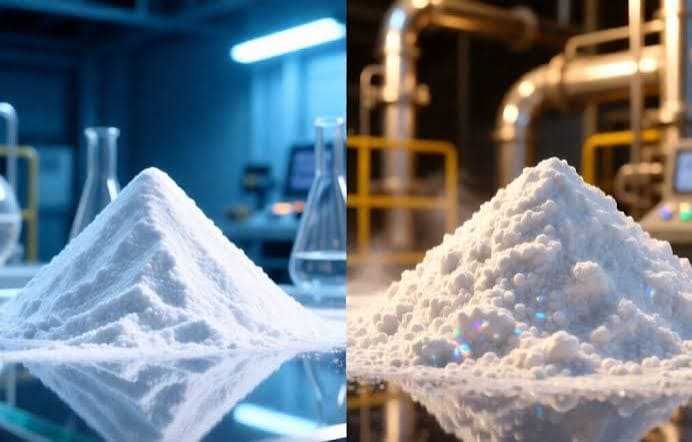
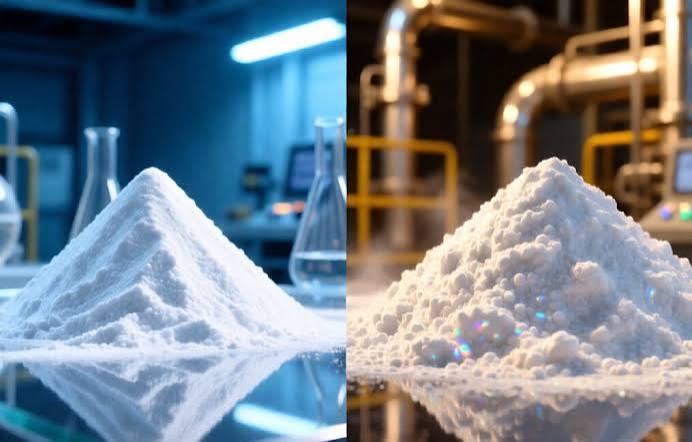
Commercial titanium dioxide is manufactured using two principal industrial processes: the sulphate process and the chloride process. The sulphate process is the older and more established production route. It uses sulfuric acid to digest titanium-bearing ores, producing titanium dioxide through a series of purification and calcination steps. The process has relatively lower capital investment requirements and can utilise a wider range of titanium ores, making it suitable for many standard industrial applications. However, it also generates larger quantities of process waste and generally requires more extensive downstream purification to achieve premium pigment quality. The chloride process, by contrast, converts high-grade titanium feedstock into titanium tetrachloride, which is then oxidised at high temperature to produce highly purified titanium dioxide pigment. Although chloride-process plants require greater capital investment and higher-quality raw materials, they produce cleaner, more consistent pigments with superior optical performance and lower waste generation. These characteristics have made the chloride route the preferred manufacturing process for many premium applications where colour consistency, weather resistance, and long-term durability are critical.
In addition to production route, titanium dioxide is supplied in two principal crystal forms: rutile and anatase. Both consist of titanium dioxide, but their crystal structures give them different physical and performance characteristics. Rutile-grade TiO₂ offers higher refractive index, greater opacity, improved weather resistance, and superior ultraviolet stability, making it the preferred pigment for architectural paints, industrial coatings, automotive finishes, plastics, and outdoor applications where long service life is required. Anatase-grade TiO₂, while providing excellent whiteness and brightness, generally exhibits lower weather resistance and is more commonly used in applications such as paper, certain indoor coatings, ceramics, fibres, and products where long-term outdoor durability is less critical. As a result, most premium coatings and high-performance plastic compounds are formulated using chloride-process rutile titanium dioxide, combining the advantages of both the cleaner production route and the higher-performing crystal structure. Procurement professionals should therefore evaluate both manufacturing process and crystal form when comparing product specifications because these characteristics directly influence finished product performance.
For buyers, titanium dioxide procurement extends well beyond comparing pigment prices. Product selection should consider manufacturing route, crystal structure, particle treatment, intended application, and long-term performance requirements alongside commercial factors such as availability and supplier reliability. A coatings manufacturer seeking maximum weatherability may require chloride-process rutile grades, while a paper producer or certain industrial applications may find sulphate-process or anatase grades fully suitable from both technical and economic perspectives. Understanding these distinctions also helps explain why premium TiO₂ grades often command higher prices than standard industrial pigments. Procurement professionals who appreciate the relationship between production technology, crystal chemistry, and application performance are better positioned to evaluate supplier offerings, interpret market developments, and optimise sourcing decisions. Titanium dioxide demonstrates that product quality in specialty inorganic chemicals depends not only on chemical composition but also on manufacturing technology and material structure—knowledge that supports more informed purchasing across coatings, plastics, paper, and advanced manufacturing industries.
Looking for pigment procurement intelligence or titanium dioxide market insights? Understanding production routes, crystal forms, and application-specific grades helps buyers select the right TiO₂ product while balancing performance, quality, and long-term procurement value.
Titanium Dioxide CAS: 13463-67-7