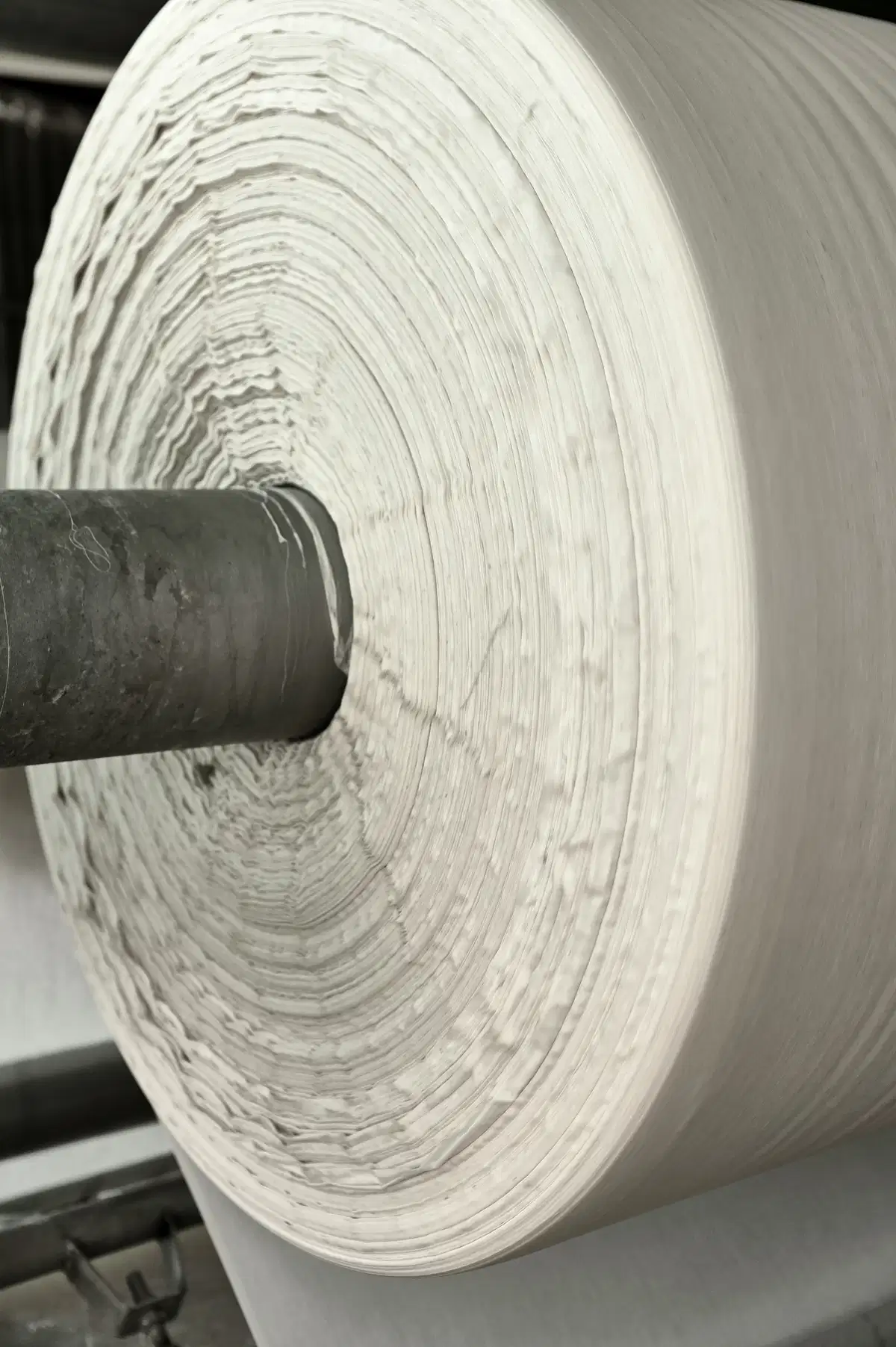
Paper quality depends on more than fiber selection, refining and drying conditions. Sizing agents in papermaking play a critical role in controlling how the finished sheet interacts with water, inks, coatings and other liquids, making them important chemical inputs for manufacturers targeting consistent performance.
A well-designed sizing program can improve liquid resistance without sacrificing formation, strength or print performance. For procurement teams, understanding the differences between internal and surface sizing, as well as the characteristics of rosin, AKD, ASA and starch-based systems, helps support better purchasing and process decisions.
What Sizing Agents Do in Papermaking
Paper fibers naturally attract water because cellulose contains hydrophilic groups. Without suitable treatment, liquids can penetrate the sheet quickly, which may create problems during printing, writing, packaging or further converting.
Sizing reduces this unwanted liquid penetration by changing the surface and internal characteristics of the paper. The treatment helps manufacturers achieve a controlled balance between liquid resistance and the other properties required by the end-use application.
Sizing can influence several commercially important properties:
Water resistance: The sheet absorbs water more slowly and maintains greater dimensional stability when exposed to moisture.
Print performance: Controlled liquid absorption helps inks remain closer to the intended surface instead of spreading excessively through the sheet.
Surface behavior: Proper sizing contributes to a more controlled interaction between paper, coatings and printing fluids.
Process consistency: Stable sizing chemistry can help mills maintain repeatable quality across production runs.
TAPPI identifies rosin, alkyl ketene dimer, alkenyl succinic anhydride and surface sizing additives among the principal sizing technologies used in papermaking.
Internal and Surface Sizing Systems
Papermakers generally divide sizing into two broad categories, internal sizing and surface sizing. The choice depends on the grade of paper, production process, target liquid resistance and downstream application.
Internal sizing introduces the sizing chemical into the fiber furnish before sheet formation. This approach distributes the sizing throughout the paper structure and can provide resistance to water and aqueous liquids across the sheet.
Common internal sizing technologies include:
Rosin sizing: A traditional approach that has supported paper production for decades. Rosin systems can work with suitable retention and chemical conditions and remain relevant for particular grades and mill configurations.
Alkyl ketene dimer, or AKD: A widely used synthetic sizing chemistry that provides hydrophobic properties and works particularly well in neutral or alkaline papermaking systems.
Alkenyl succinic anhydride, or ASA: Another synthetic internal sizing agent that reacts rapidly with cellulose and requires careful preparation, emulsification and process control.
Surface sizing applies the treatment after sheet formation, commonly through a size press or related application system. Starch and other surface-active materials can improve surface properties while also contributing to strength and print performance.
Major Sizing Agents and Their Applications
Different sizing agents offer different operating characteristics, so mills select them according to paper grade and process conditions.
Rosin-Based Sizing
Rosin remains one of the best-known sizing materials in the paper industry. Mills historically used rosin-based systems extensively for internal sizing, often together with chemical aids that support retention and deposition on fibers.
Rosin sizing can be attractive where established equipment and process knowledge already support the chemistry. However, mills need to manage factors such as pH, water chemistry, temperature and additive interactions because these variables can influence sizing performance.
Alkyl Ketene Dimer
Alkyl ketene dimer (AKD) provides hydrophobic properties by interacting with cellulose and developing water resistance within the sheet. It has become an important option for neutral and alkaline papermaking.
AKD can support grades where controlled water absorption matters, including writing, printing and certain packaging papers. TAPPI research also highlights that AKD performance can change under environmental conditions, with light and oxygen contributing to sizing reversion under certain circumstances.
Alkenyl Succinic Anhydride
Alkenyl succinic anhydride (ASA) offers another route to internal sizing. Its rapid reaction and hydrolysis characteristics make preparation and application control particularly important.
ASA systems often require careful emulsification before application. Water quality, emulsion quality, storage conditions and feed practices can influence performance, which makes operational discipline important alongside chemical selection.
Starch and Surface Sizing Materials
Starch has multiple roles in papermaking, including surface treatment and strength development. Surface sizing can improve resistance to liquid penetration while also modifying surface characteristics that affect printing and converting.
For mills, starch-based systems can provide an efficient way to combine several performance objectives. The precise formulation depends on paper grade, machine configuration and the desired balance between strength, surface properties and liquid resistance.

How Sizing Affects Paper Quality
Sizing does not operate as an isolated property. Changes in sizing chemistry can influence several characteristics that buyers and downstream users evaluate when they purchase paper.
One of the most important effects is liquid absorption. Excessive penetration can cause ink feathering, show-through and poor surface definition, while insufficient absorption can interfere with ink setting and subsequent handling.
Sizing also interacts with paper strength and surface characteristics. A mill therefore needs to optimize the chemical dosage rather than simply maximize hydrophobicity.
Key quality considerations include:
Cobb value and water absorption: These measurements help indicate how readily the sheet takes up water.
Printability: Controlled absorption can support sharper images and more consistent ink behavior.
Surface strength: The sizing program should complement the requirements of printing and converting operations.
Dimensional stability: Reduced uncontrolled moisture uptake can help limit unwanted changes in sheet dimensions.
Coating compatibility: Sizing must work with pigments, binders and other coating components used later in production.
The correct target depends heavily on the final product. A packaging board, printing paper and specialty paper may require very different liquid resistance characteristics.
Process Conditions Can Change Sizing Performance
Selecting a suitable chemical represents only one part of sizing control. The performance of the final sheet also depends on how the chemical interacts with fibers, fillers, process water and other additives.
For procurement managers, this means the cheapest chemical on a per-ton basis may not necessarily deliver the lowest overall production cost. A product that requires higher dosage, creates unstable emulsions or performs poorly under a mill's water conditions can increase operating costs.
Important variables include:
pH: Changes in papermaking chemistry can influence sizing efficiency and the behavior of different sizing systems.
Water quality: Hardness, dissolved materials and other components in process water can affect chemical performance.
Filler content: Fillers increase the available surface area and can consume or interfere with sizing chemistry.
Retention: Poor retention can reduce the amount of sizing material that remains associated with the sheet.
Temperature: Storage, preparation and application temperatures can affect chemical stability and processing.
Emulsion quality: This becomes particularly important for ASA and other sizing systems that require controlled dispersion.
TAPPI's papermaking wet-end references specifically address sizing-agent storage, ASA emulsification, emulsion quality and the effects of water quality, demonstrating how closely chemical performance connects with mill operations.
Sizing Agents Across Paper and Board Applications
The commercial value of sizing becomes clearer when looking at the wide range of paper products that require controlled liquid interaction.
Printing and writing papers need a balance between resistance and ink receptivity. Excessive water resistance can create problems during printing, while inadequate sizing can allow ink or aqueous fluids to penetrate too deeply.
Packaging grades often require stronger protection against moisture. Paperboard used for cartons, food-related packaging or other applications may combine sizing with coatings and barrier technologies to achieve the required performance.
Specialty papers can have even more specific requirements. Industrial papers, labels, technical papers and grades exposed to particular liquids may need carefully selected sizing systems rather than a general-purpose treatment.
For buyers, the end-use application should therefore drive the specification. Procurement should avoid treating all sizing chemicals as interchangeable commodities.
Sourcing and Procurement Considerations for Paper Mills
Chemical purchasing teams need to evaluate sizing agents from both technical and commercial perspectives. A reliable supply strategy should consider the product specification, compatibility with the mill's process and the consistency of supply.
Before approving a supplier, procurement teams should assess:
Active content and product specification: Confirm that the material meets the agreed technical requirements for every shipment.
Application compatibility: Check whether the sizing chemistry fits the mill's furnish, pH, fillers and existing wet-end program.
Storage requirements: Review temperature, shelf-life and handling requirements before placing larger orders.
Supply reliability: Evaluate production capacity, lead times, shipping options and the supplier's ability to support recurring demand.
Documentation: Request appropriate technical documentation, safety information and batch-related quality information.
Total delivered cost: Compare the delivered chemical cost together with dosage requirements, handling and process efficiency.
Consistency often matters more than a small difference in quoted unit price. Variability between batches can force mills to adjust dosage or operating conditions, potentially affecting paper quality and production stability.
Sustainability and Efficiency in Sizing Chemistry
Paper manufacturers increasingly look at chemical efficiency alongside traditional quality requirements. Reducing unnecessary chemical consumption can lower material use, minimize waste and support more efficient production.
Sizing optimization can contribute to this goal by matching dosage to the actual performance requirement. Applying more sizing than necessary does not automatically produce better paper and can create additional costs or interfere with other process steps.
Mills can improve efficiency by monitoring paper quality closely and evaluating the relationship between dosage, retention and final liquid resistance. Better control can help reduce overuse while maintaining the required specification.
The broader wet-end chemical system also matters. Sizing agents interact with retention aids, starches, fillers and other additives, so optimization works best when mills evaluate the complete process rather than a single chemical in isolation.
What Procurement Teams Should Do When Buying Sizing Agents
For chemical traders, importers and paper-industry buyers, sizing chemicals represent a category where technical understanding can directly improve purchasing decisions.
A practical sourcing approach should start with the paper grade and its required performance. Buyers can then work backward to identify the appropriate sizing technology, dosage range and product specification.
The following priorities can help structure purchasing decisions:
Define the end-use requirement first. Identify the target water resistance, printability, surface strength and other properties required by the finished paper.
Match chemistry to the process. Consider whether the mill operates under acidic, neutral or alkaline conditions and evaluate compatibility with fillers and other additives.
Evaluate supplier consistency. Review technical specifications, batch consistency and supply history before relying on a new source.
Compare delivered economics. Look beyond the quoted price and assess dosage, freight, storage and expected process performance.
Maintain alternative sources. Multiple qualified suppliers can reduce exposure to unexpected production, logistics or regional supply disruptions.
For chemical traders, this also creates an opportunity to differentiate through technical support. Buyers increasingly value suppliers that understand how a product fits into the papermaking process rather than suppliers that simply quote a commodity price.
The Bottom Line for Paper Chemical Buyers
Sizing agents remain essential tools for controlling paper's interaction with water and other liquids. Rosin, AKD, ASA and surface sizing materials each offer different characteristics, while process conditions determine how effectively the selected chemistry performs.
For procurement teams, the strongest sourcing strategy combines product quality, application compatibility, supply reliability and total cost. Understanding the role of sizing in paper quality allows buyers to make more informed decisions and helps chemical suppliers position the right products for specific mill requirements.
Aluminium Sulfate CAS: 7784-31-8
SOURCE LINK:https://www.tappi.org/content/PRESS/TOC/0102B051.pdf?