
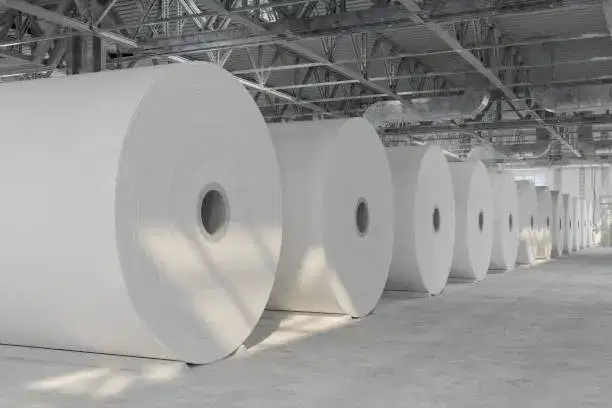
Paper manufacturers are under constant pressure to produce stronger and more functional products while controlling fiber use, energy consumption and production costs. Specialty chemicals for paper strength help mills improve the performance of fiber networks, control water interactions and deliver more consistent properties across packaging, printing, tissue and specialty grades.
Chemical additives can influence how fibers bond, how efficiently materials remain in the paper web and how the finished sheet responds to moisture, pressure and handling. As paper producers pursue lighter products and higher performance, chemical formulation has become an increasingly important part of papermaking strategy.
Why Paper Strength Depends on Chemistry
Paper strength comes from the interaction between individual cellulose fibers and the bonds formed between them. Fiber length, morphology, refining, sheet formation and drying all influence the final result, but chemical additives can modify the conditions under which these fibers interact.
Research published by Springer Nature highlights the importance of fiber bonding and chemical additives in both dry and wet paper strength. Specialty chemicals can help strengthen fiber-to-fiber connections or control the way water affects those connections.
This matters commercially because mills increasingly need to balance strength with material efficiency. A stronger sheet can support lower basis weights in some applications, potentially reducing fiber consumption while maintaining the required performance.
Dry Strength Additives Improve Sheet Performance
Dry-strength chemistry focuses on improving the mechanical properties of paper when the finished sheet is dry. Starch-based products and synthetic polymers such as polyacrylamide can strengthen the bonds between fibers and improve tensile performance.
Modified starch remains an important option because it can interact with cellulose and improve bonding without requiring complex chemical systems. Polyacrylamide-based products also play an important role in modern papermaking, particularly where mills need controlled strength performance across different furnish compositions.
Specialty chemicals can support:
Higher tensile strength, helping sheets withstand pulling and mechanical stress during converting and use.
Improved resistance to handling, which can benefit packaging and paper products exposed to repeated mechanical forces.
Lower fiber requirements, when increased strength allows manufacturers to achieve target performance with lighter sheets.
More consistent production, particularly when chemical treatment is matched to furnish characteristics and machine conditions.
Research on paper additives has shown that modified starches and polyacrylamide-based polymers remain among the commonly used approaches for improving dry strength. Other materials, including carboxymethyl cellulose and polyvinylamine, also have roles in specialised applications.
Wet Strength Chemistry Protects Paper From Moisture
Paper loses a significant portion of its strength when exposed to water because moisture disrupts the interactions that hold cellulose fibers together. This creates a major challenge for products such as food packaging, labels, industrial papers, towels and other grades that may encounter moisture during use.
Wet-strength chemicals address this problem by helping maintain fiber bonding when the sheet becomes wet. Polyamidoamine epichlorohydrin, commonly known as PAE, is one established chemistry used for this purpose, while other polymer systems can provide different approaches to wet-strength performance.
The choice of wet-strength chemistry depends heavily on the intended paper grade and production conditions. Buyers therefore need to consider more than price when evaluating products, since dosage efficiency, compatibility with the furnish and wastewater considerations can influence the overall value of an additive.

Retention and Drainage Chemicals Support Production Efficiency
Paper chemistry does more than strengthen the finished sheet. Retention and drainage systems help manufacturers manage fine fibers, fillers and other materials during the wet-end stage, supporting better control of the paper web and production process.
Retention aids can help keep valuable components within the sheet instead of allowing them to leave with process water. Better retention can support more consistent paper properties while also helping mills manage material losses.
Drainage chemistry works alongside retention systems by influencing how quickly water leaves the forming web. Efficient water removal can support machine productivity and reduce the energy required later in the drying process.
Wet-end chemistry therefore has a broader commercial role. It can influence:
Raw material utilization and the retention of fine particles.
Water management within the paper machine.
Sheet formation and finished paper uniformity.
Machine runnability and production stability.
Energy requirements associated with drying.
Specialised wet-end chemistry covers retention, drainage, sizing, deposit control and other functions that affect both productivity and paper quality.
Sizing Chemicals Improve Water Resistance and Surface Quality
Paper needs controlled interaction with liquids depending on its end use. Without appropriate sizing, many grades can absorb water too quickly, affecting print quality, dimensional stability and handling performance.
Sizing chemicals modify the surface and internal characteristics of paper so that manufacturers can achieve the required level of liquid resistance. Different sizing approaches are available for acidic, neutral and alkaline papermaking conditions.
For procurement teams, sizing chemicals should be evaluated according to the final application rather than as a generic commodity. Printing papers, packaging grades and specialty papers can have very different requirements for absorption, surface properties and compatibility with downstream processes.
The wider field of paper chemistry includes sizing systems alongside retention aids, fillers, dry-strength additives and wet-strength resins. This reflects how closely chemical selection connects with the final performance of a paper grade.
Specialty Chemicals Help Mills Use Recycled Fiber More Effectively
The increased use of recovered fiber creates additional challenges for paper manufacturers. Recycled furnish can behave differently from virgin fiber because repeated processing changes fiber characteristics and can affect bonding, drainage and strength development.
Chemical additives can help mills compensate for some of these challenges by improving bonding, retention and wet-end control. This can become particularly important for packaging producers seeking strong lightweight products from fiber sources with variable characteristics.
The commercial objective is not simply to add more chemicals. Mills need to select a treatment system that produces the desired performance at an efficient dosage while maintaining machine stability and finished product quality.
For chemical buyers, this makes technical service and application knowledge increasingly valuable. A supplier that understands furnish composition, machine conditions and target paper properties can provide greater value than a supplier competing only on unit price.
Sustainability Is Changing Paper Chemical Selection
Sustainability requirements are influencing both paper production and chemical procurement. The industry continues to focus on responsible fiber sourcing, recycling, emissions reduction and water management, while manufacturers also look for ways to improve product performance with less material.
Chemical suppliers are responding with systems designed to improve efficiency and support higher-performance paper at lower material intensity. Research into chemically modified cellulose microfibrils and nanofibrils also demonstrates the potential for advanced bio-based materials to function as paper-strength additives.
This area could become increasingly important as packaging producers seek alternatives to heavier materials. Stronger paper can help maintain performance while reducing basis weight, provided the resulting product still meets converting and end-use requirements.
At the same time, environmental considerations remain important when evaluating individual chemistries. Buyers increasingly need information on product composition, manufacturing conditions, wastewater implications and regulatory requirements before committing to long-term supply arrangements.
What Chemical Buyers Should Check Before Sourcing
Specialty paper chemicals can deliver strong technical benefits, but procurement decisions need to consider the complete supply picture. A low quoted price may not represent the lowest overall cost if the product requires higher dosage or creates processing problems.
Procurement teams should assess several factors before selecting a supplier:
Active content and specification: Confirm concentration, purity and relevant technical parameters so quotations can be compared on an equivalent basis.
Dosage efficiency: Compare the amount required to achieve the target strength or performance rather than focusing only on the price per tonne.
Application compatibility: Check whether the chemical fits the mill's furnish, pH conditions, machine configuration and existing wet-end program.
Supply reliability: Evaluate production capacity, lead times, shipping options and the supplier's ability to maintain consistent quality.
Regulatory documentation: Request the technical and safety documentation required for the destination market and intended application.
Technical support: Application guidance can reduce trial time and help mills optimize chemical consumption.
For traders and importers, consistency deserves particular attention. Paper mills often operate continuous production systems, so variability between shipments can affect chemical dosage, paper quality and machine performance.
The Market Outlook for Paper Specialty Chemicals
The role of specialty chemicals in papermaking is likely to expand as producers pursue stronger lightweight products and more efficient manufacturing. Demand for improved packaging performance is especially relevant because paper-based materials increasingly compete with other packaging formats.
Research continues to explore new polymer systems, modified cellulose materials and more targeted approaches to fiber bonding. Recent studies show that the accessibility of fiber surfaces can strongly influence how polymeric additives interact with paper fibers and ultimately affect tensile performance.
The development of advanced cellulose-based additives is another area to watch. Research into chemically modified cellulose micro- and nanofibrils has demonstrated potential for improving strength at relatively low addition levels while supporting applications ranging from packaging to insulation and wrapping papers.
For the global chemical trade, this creates opportunities across established additives and emerging performance chemicals. Suppliers that can offer reliable specifications, competitive logistics and application-focused support will be better positioned to serve paper manufacturers seeking higher-value chemical solutions.
The Bottom Line for Paper Procurement Teams
Specialty chemicals have become an important tool for improving paper strength, quality and production performance. Dry-strength additives can reinforce fiber bonding, wet-strength systems can protect performance under moisture and retention, drainage and sizing chemicals can improve the efficiency and functionality of the papermaking process.
For buyers, the strongest sourcing strategy combines technical performance with supply reliability. Evaluating dosage, compatibility, documentation and consistency alongside price can help procurement teams secure better long-term value.
As paper producers move toward lighter, stronger and more resource-efficient products, chemical selection will remain closely connected to manufacturing performance. For traders and suppliers, this creates a growing opportunity to support mills with reliable specialty chemical solutions tailored to modern paper requirements.
Polyacrylamide CAS: 9003-05-08
SOURCE LINK:https://link.springer.com/article/10.1007/s10570-021-03817-7